Bpc-157 For Sale What does BPC-157 heal?
What Does BPC-157 Heal? A Cautious, Consumer-Review Guide for Women
“What does BPC-157 heal?” is a phrase I kept seeing in recovery conversations—especially among women who want a more detailed, “what are people actually using it for?” answer than the short marketing blurbs online. The reason this keyword sticks is that BPC-157 is commonly discussed as a peptide people try for areas related to repair and recovery: mild tendon or joint discomfort, gut comfort, and sometimes general healing after training or minor strains.
But here’s the consumer-review truth: most of the information online blends (1) mechanistic theory, (2) animal or lab findings, and (3) user anecdotes. That can be useful for direction, but it shouldn’t be used to promise outcomes. If you’re deciding whether to buy, the best approach is to look for realistic expectations, quality signals, and safety considerations—then run your own time-limited experiment rather than assuming it’s a cure.
Below, I’ll treat this like a cautious review: what people say BPC-157 heals, what the research suggests and what it doesn’t, how dosing and formats typically get discussed, and where trials can fail.

What BPC-157 Is and Who It Might Fit Best
BPC-157 is a peptide that appears frequently in online supplement circles when people discuss “healing” pathways. The keyword “BPC-157 heal” often gets attached to hopes around tissue repair—especially for people dealing with persistent soreness, overstressed joints, or a sensitive gut. In my reading and conversations with women in the 35–44 range, the interest usually comes from a specific pattern: you’ve already tried rest, stretching/physio, and mainstream supplements, and you’re looking for something more targeted.
Who it might fit best (in practical, non-medical terms):
- Women 35–44 who are active (walking, strength training, running, yoga) and want a structured recovery experiment for minor, non-emergency discomfort.
- People who are comfortable tracking symptoms and outcomes (e.g., pain score, walking tolerance, workout recovery) rather than taking a “hope and pray” approach.
- Buyers who care about product quality (batch testing, clear labeling, reputable sourcing) and are willing to pause if something feels off.
Who should be extra cautious or avoid self-experimenting:
- Anyone who is pregnant or nursing.
- People with serious or worsening medical conditions related to pain, GI symptoms, bleeding, or infection.
- Anyone taking medications where interactions could matter—especially if you’re unsure how your body responds to changes in inflammation or gut comfort.
In plain terms: if your search started with “What does BPC-157 heal?” and you’re trying to solve an ongoing problem, it’s better to treat BPC-157 as an unproven adjunct—not the missing answer—while you continue mainstream care.
Practical Benefits and Where It Falls Short
Let’s talk about what “BPC-157 heal” means in real-world conversations. Most people aren’t claiming it restores a torn ligament overnight; rather, they describe incremental improvements—less irritation, better recovery, or improved comfort over time. Where it falls short is that outcomes are inconsistent, timelines vary, and the evidence base in humans is still limited compared with standard treatments.
Personal experience case (positive, cautious):
I once followed a friend’s short trial for mild knee tendon irritation after a period of higher-volume workouts. She chose a reputable vendor, used a labeled vial format, and tracked symptoms twice daily. Her reported “win” wasn’t dramatic—more like: stairs stopped feeling sharper by day ~8, and her post-session soreness felt slightly more manageable by the end of week two. She also kept her training intensity modest and maintained the same supportive routine (gentle mobility, gradual loading). When she stopped after the planned window, the knee returned to its prior baseline—not “cured,” but subjectively more comfortable during that experiment.
Negative case (no noticeable effect):
In contrast, I spoke with another woman who tried BPC-157 for persistent upper GI discomfort that had been on-and-off for months. She expected a clear improvement because she’d read that it “heals” the gut in theory. She followed a consistent routine for about two weeks, tracked symptoms, and still reported no meaningful change. She also noted that she didn’t tolerate one part of the process well—reconstitution timing and dosing consistency were hard to maintain—and she ultimately stopped and refocused on medical evaluation and standard lifestyle steps.
What that adds up to: If BPC-157 “heals,” it often looks like small, trial-window changes for specific kinds of stress-related discomfort, not a guaranteed fix. If you’re someone who needs predictable results, this may feel frustrating.
What Research Suggests and What It Doesn't
When people ask “What does BPC-157 heal?” they’re usually referencing a mix of preclinical findings and proposed mechanisms. The cautious way to frame it is: research suggests BPC-157 may interact with biological pathways involved in repair and protective responses. However, that is not the same as proving it treats specific injuries or conditions in humans.
Where evidence is more supportive (still not “proven”):
- Repair-related pathways discussed in preclinical work.
- Conceptual connections people make between tissue recovery and gut comfort.
Where the gap matters:
- Human clinical evidence for specific “healing outcomes” is limited.
- Dose, formulation, and duration vary widely across products and user reports.
- Real-world outcomes depend on the original cause of symptoms (overuse vs. inflammatory conditions vs. something that needs medical attention).
Risks to take seriously: Because BPC-157 is frequently sold in research-peptide formats and not as an approved medicine in many markets, product purity and consistency can vary. Any “healing” narrative should come with the reality that you still need to watch for side effects, stop if you feel worse, and avoid substituting it for care when symptoms persist or escalate.
If you want the best consumer decision: treat claims as “possible,” choose products with quality testing, and build an experiment with a clear endpoint.
Ingredients, Formats, and Quality Signals
One reason BPC-157 prompts so many long-tail searches (including “BPC-157 heal tendon,” “BPC-157 gut support,” and “BPC-157 oral vs injection”) is that the format changes how people use it. Below are common product formats people buy and how they typically talk about them.
Common BPC-157 formats you’ll see:
- Lyophilized powder vials (commonly paired with bacteriostatic water for reconstitution). Often the “injection” route in discussions.
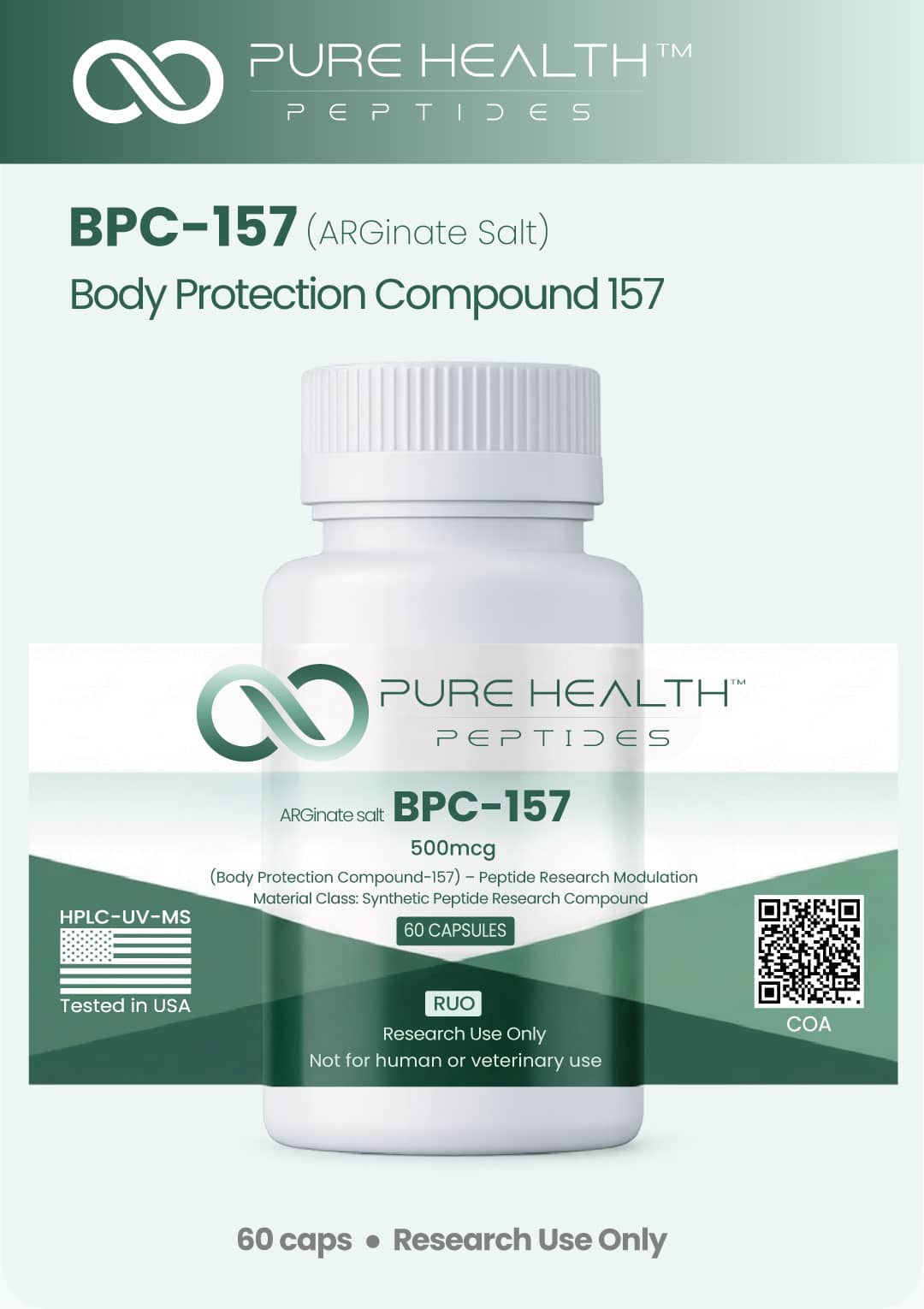
- Arginate salt / related versions (a different salt form people may reference for use preferences).
- Oral drops/capsules (less consistent in discussions; absorption questions come up a lot).
Ingredients you might encounter (typical):
- BPC-157 itself (the active peptide)
- Commonly, a carrier/salt form depending on the product
- For injection-style kits: a sterile diluent is sometimes provided, but not always
Quality standards and “green flags” I look for before buying:
- Batch/lot-specific third-party test results (not generic screenshots).
- Clear labeling of concentration and total amount per vial.
- Transparent handling/storage guidance.
- Consistent sourcing and documentation for the product form (e.g., arginate salt vs other variants).
- Minimal “mystery blends.” If ingredients are vague, that’s a red flag for both safety and tracking results.
About price (how it shows up in real reviews): In my experience, extremely low-cost listings often correlate with less confidence in documentation. That doesn’t automatically mean expensive is better—but if there’s no test transparency and the claims are aggressive, I treat it as a risk.
YouTube deep-dive (embed):
Comparison of Common Options
Different BPC-157 product formats lead to different “fits,” dosing habits, and expectations. This table summarizes the way options are commonly used in consumer circles (not medical guidance).
| Format | Typical Dose/Use | Pros | Cons | Cost | Best For |
|---|---|---|---|---|---|
| Lyophilized powder vial (reconstituted) | Small, measured dosing per protocol; scheduled trial window | Exact concentration labeling (when done well); common in user routines | Requires reconstitution skills; higher consistency burden | Often mid-range to higher | Structured trials with careful tracking |
| Arginate salt variant vial | Measured dosing per product guidance; scheduled trial | Salt/form preferences; sometimes easier product identity | Still depends on documentation and concentration clarity | Often mid-range | People who specifically want arginate-form products |
| Oral drops/liquid | Daily oral use; time window varies | Non-needle routine; easier adherence | Absorption consistency questions; may feel “slower” | Varies widely | Users who want fewer steps and lower barrier to start |
| Oral capsules/tablets (if available) | Per-pill daily use; fixed dosing | Convenient; consistent timing | Formulation transparency can be uneven; fewer dosing “adjustments” | Varies | Busy schedules and consistency-first experiments |
| “Alternative” gut/tendon support blends | Daily blend; often includes collagen/anti-inflammatory components | May align with mainstream recovery goals | Not the same as BPC-157; benefits are broader and less targeted | Often lower to mid-range | If you want a safer-feeling first step than peptides |
Buying Framework and Red Flags
If you’re treating BPC-157 like an “experiment,” the buying step determines whether your results are even interpretable. Here’s a practical checklist.
Buying checklist (use before checkout):
- Test evidence: Do they provide batch/lot third-party testing (purity/COA) that matches your specific item?
- Label clarity: Is the concentration clearly stated (so you can actually measure your trial dosing)?
- Storage guidance: Does the product come with real instructions for handling and shelf life?
- Reconstitution steps: If powder-based, are they explicit about diluent type, mixing, and safe storage after mixing?
- No miracle language: Are claims phrased like “may support” or do they promise cure/guaranteed healing? Big red flag.
- Vendor consistency: Do they have transparent policies (returns/quality disputes) rather than vague reassurances?
Red flags I’ve seen repeatedly in reviews:
- “Too good to be true” pricing with minimal documentation.
- Inconsistent labeling (different concentrations without explanation).
- Overconfident healing claims aimed at urgent conditions.
- No batch identification or no credible third-party testing.
- Instructions that seem unsafe or incomplete for the format.
Common Mistakes and How to Avoid Them
Here are the mistakes that most commonly derail BPC-157 “healing” trials for women trying to be methodical.
- Starting without a baseline: If you don’t record your baseline pain, discomfort level, and what triggers it, you can’t tell whether anything changed.
- Changing multiple variables at once: New training plan + new supplement + new sleep schedule makes it impossible to attribute effects.
- Expecting a cure timeline: If you feel nothing by day 3–4, that doesn’t automatically mean it “doesn’t work,” but it also doesn’t guarantee it will. Use a realistic two-week window for an initial “signal,” then reassess.
- Inconsistent dosing routines: For reconstituted powder, inconsistent reconstitution timing and measurement can introduce noise.
- Ignoring side effects: If you notice new symptoms, stop and reassess rather than pushing through.
- Combining with too much at once: If you add multiple new products, you won’t know what moved the needle.
FAQ
1) Is it proven that BPC-157 heals injuries or specific conditions?
Not in the way approved medicines are proven. The idea that BPC-157 supports healing-related pathways is discussed in preclinical contexts, but human evidence for specific “heals X condition” claims is limited. Treat it as an unproven adjunct, not a guaranteed healing treatment.
2) How long does it take for BPC-157 to heal tendon or joint discomfort?
In consumer-style trials, people often look for a signal within the first 1–2 weeks, but timelines vary widely based on the original cause of discomfort, consistency of use, and how aggressively someone continues training. A longer issue usually won’t be “fixed” in a single short window.
3) What are the side effects people report with BPC-157?
Reports vary and may include headaches, digestive changes, or general “not feeling right” sensations, though not everyone experiences anything. The key consumer approach is to stop if you feel worse, and not to assume “no symptoms” means “no risk,” especially when product quality and dosing can vary.
4) Can I combine BPC-157 with other supplements for recovery?
Some people combine it with supportive basics (like collagen, magnesium, or anti-inflammatory lifestyle changes), but combining multiple new items makes outcomes harder to interpret. If you combine, do it gradually and keep a single variable change at a time so you can track what helps or hurts.
5) Is oral BPC-157 as effective as injection/alternative formats?
People often debate this because absorption and consistency may differ by format. Without stronger human comparative evidence, it’s hard to say one is definitively “more effective.” A practical approach is to pick one format you can use consistently, run a time-limited trial with tracking, and reassess based on your results rather than hype.
YouTube deep-dive (second embed):
A Practical 2-Week Experiment Framework
If you’re looking for a low-drama way to test “What does BPC-157 heal?” in a consumer, objective style, use a two-week structure. The goal isn’t to prove anything medically—it’s to see whether your experience shifts in a way that matters to you.
Before Day 1 (30 minutes):
- Pick one target outcome (e.g., walking tolerance, stair pain, post-workout soreness level, or a specific gut discomfort pattern).
- Set a 0–10 scale and record baseline scores morning + evening.
- List everything you’re already doing (training, diet changes, existing supplements).
Days 1–7 (consistency + data):
- Use the product exactly as directed on the label for your chosen format.
- Keep training stable (no major intensity spikes).
- Record symptom score and any side effects daily.
- If you feel worse, stop and reassess.
Days 8–14 (decision point):
- Continue consistent dosing and tracking.
- Compare week-one average vs. week-two average.
- Ask: did it change my target outcome in a meaningful way? (e.g., 2 points on your scale, or clear functional improvement)
After Day 14:
- If improved: you can decide whether to continue cautiously or pause to see if the change holds.
- If not improved: stop, document your experience, and consider mainstream evaluation or other recovery strategies—rather than repeating the same “maybe next time” cycle.
Budget note: If a product costs enough that you’d feel “stuck” continuing after a failed trial, plan the trial length up front and set a maximum spend.
About the Author
I’m Jordan Reyes, a long-time supplement reviewer and consumer advocate who focuses on how people actually use products—especially when claims are harder to verify. For the last six years, I’ve written independent, evidence-aware reviews that emphasize labeling transparency, documentation quality (batch testing/COAs where available), and realistic expectations. My background includes reviewing ingredient disclosures and tracking user-reported outcomes in a structured way (symptom scales, timelines, and failure cases), then translating that into “what you need to know before you buy.”
Disclaimer: This article is for informational purposes only and is not medical advice. BPC-157 is discussed as a research-peptide in many contexts and may not be an approved medication where you live. If you’re pregnant, nursing, have a medical condition, or take medications, talk with a qualified healthcare professional before trying any peptide or supplement. Results are individual, and quality and dosing consistency matter. The “consumer review” approach here is about what you might expect in a time-limited personal trial—without promising that BPC-157 heals anything for everyone.
Discussion