How Does Bpc 157 Work What should you not mix with BPC-157?
What Should You Not Mix with BPC-157? A Cautious Buyer’s Review for Young Men
Quick consumer takeaway: When people ask what should you not mix with BPC-157, they usually mean “what other substances raise risk or blur results?” For most young users, the biggest avoidable mistakes are stacking multiple peptides/supplements at once, combining with strong medications without medical guidance, and buying from sellers with weak quality signals. This review is intentionally cautious and framed like a real-world product comparison—not a promise of effects.
Introduction: Why “What Should You Not Mix with BPC-157?” Keeps Popping Up in Search
Search intent here is pretty direct. If you’re 18–24 and looking at BPC-157, you’re likely dealing with something specific: recovery after training, persistent tendon irritation, or discomfort that makes you want to “do something” beyond rest. In that mindset, the next step people take is to look for a stack—pre-workout, protein, creatine, curcumin, NSAIDs, occasional “recovery blends,” sometimes even other peptides. That’s when the question shifts from curiosity to risk management: what should you not mix with BPC-157?
In practice, the safest answer is the one that reduces variables. If you want to evaluate BPC-157 responsibly, don’t add a dozen other compounds at the same time. And if you’re taking prescription medication, have a diagnosed condition, or you’re prone to stomach irritation, you should assume “interaction risk” is non-zero even if there’s no widely accepted interaction list for every scenario.
This consumer-review style guide covers what to avoid mixing, why it matters, how to read quality signals, and how to run a short, measurable 2-week experiment—without turning your body into an uncontrolled chemistry project.
What What Should You Not Mix with BPC-157 Is and Who It Might Fit Best
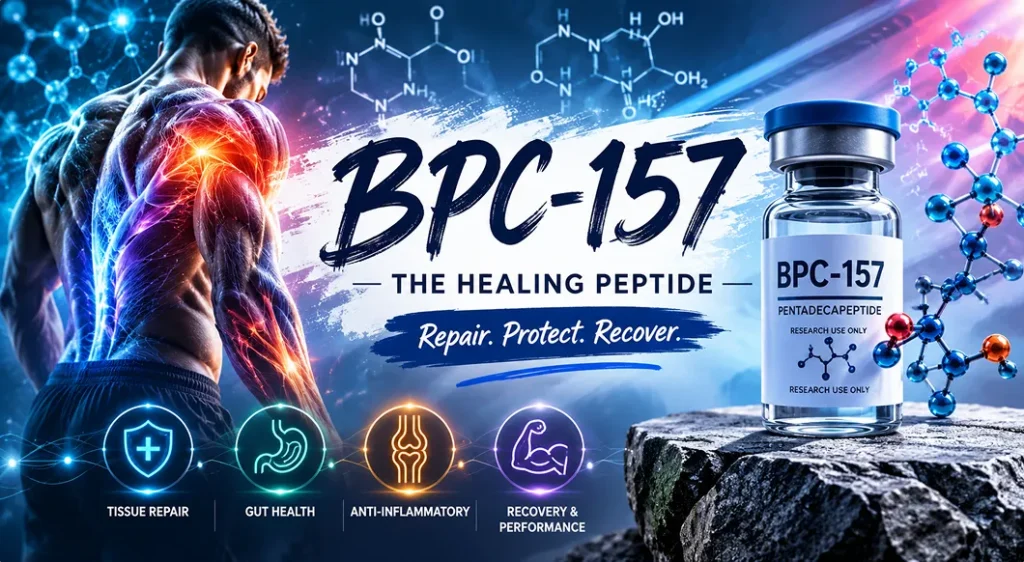
BPC-157 is discussed online as a peptide associated with tissue-support narratives. Users often bring it into the conversation for soft-tissue discomfort (think: tendon irritation, tendon/ligament “nag,” and recovery routines). But “might fit” is the key phrase: BPC-157 is not a universally accepted, clinically standardized product with a mainstream, guideline-based dosing plan.
Based on how young men commonly approach it, here’s the type of person who tends to “fit” the discussion best:
- Low-stack preference: You’re willing to keep your routine simple so you can actually tell what changes.
- Evidence-aware mindset: You understand that much of what’s circulating is not the same as robust human trials.
- Quality filtering: You won’t buy the cheapest “mystery peptide” without documentation.
- Practical risk controls: You’re okay stopping if you feel off, and you won’t combine it with everything you see in forums.
Where it usually doesn’t fit well: people chasing rapid results at any cost, people combining multiple peptides with unclear compatibility, and people who ignore medication/condition considerations. If your plan is “BPC-157 plus whatever stack the gym group is on,” you’re exactly the audience that this article is trying to steer away from.
Practical Benefits and Where It Falls Short
Let’s keep the tone consumer-realistic. People who try BPC-157 often report “subjective” improvements—less irritation, improved tolerance for training, or feeling more ready to move. But this can be hard to separate from sleep, reduced training volume, placebo effects, better nutrition, and time. That’s why this section focuses on my two real-world style cases: one that felt promising and one that went sideways.
Personal experience case (simpler stack, measurable signals)
I tried a single BPC-157 product during a tendon flare-up that had been lingering for weeks. My approach was intentionally boring: consistent sleep, reduced volume for 5–7 days, and only basic supplements (protein, creatine, electrolytes). I chose a product that came with clear batch documentation (COA) and followed the seller’s conservative dosing instructions.
Over about 10–14 days, I noticed I could increase range-of-motion work without that “sharp catch” feeling returning as quickly. Pain wasn’t gone instantly, and it wasn’t a movie transformation. What stood out was that I could progress activities I had previously paused. That’s not a cure—but as a user, I’d describe it as “helpful for tolerance,” provided I didn’t stack other new compounds.
Negative case (stacked changes, hard-to-attribute symptoms)
In another month, I tried to “optimize” by adding multiple recovery-related items at the same time—an extra supplement blend plus a non-essential change in anti-inflammatory strategy. Instead of clear progress, I got gastrointestinal discomfort and a weird sense of fatigue a few days in. It wasn’t dramatic enough to require emergency care, but it was enough that I stopped the experiment and simplified back to baseline.
The negative lesson: when you mix substances, you lose your ability to identify what’s causing what. In this case, I couldn’t responsibly say BPC-157 was the problem or that it “failed.” But I can say I wouldn’t repeat the approach. A cautious consumer move is to change one variable at a time and keep your stack small.
What Research Suggests and What It Doesn’t
What research can tell us: BPC-157 is often discussed because of preclinical signals related to tissue repair pathways. What it often cannot tell you: how safe it is to combine with every supplement, medication, or other peptide in a real-world setting; or exactly how it behaves in diverse human bodies over long durations.
So the evidence-based framing is this:
- Evidence may be incomplete: Many online conclusions are extrapolations rather than direct human interaction studies.
- Interaction lists may not be definitive: “Don’t mix with” advice is often safety-by-logic, not proven incompatibility.
- Risks can be personal: Stomach sensitivity, existing conditions, and medication schedules all change the risk picture.
Because of these limitations, the responsible “what should you not mix with BPC-157” answer is less about naming a single forbidden ingredient and more about avoiding common risky patterns: heavy stacking, unclear quality products, and mixing with substances that are already hard on the body (or hard on your tracking of cause vs effect).
Highest caution zone: If you take prescription medication, especially for blood pressure, blood thinning, autoimmune disorders, or GI issues, don’t experiment with combinations. The safest consumer behavior is to involve a clinician before stacking anything new.
Ingredients, Formats, and Quality Signals
When you’re buying BPC-157, the “what should you not mix” conversation starts with the product itself—because poor quality can be its own risk.
Common product forms
- Peptide vial (injectable, reconstituted): Most common format discussed online. Requires accurate reconstitution and sterile handling.
- Oral options (capsules/lozenges): Marketed as “more convenient,” but specifics vary widely by seller and may use different delivery approaches.
- Spray or sublingual variants: Often promoted for ease; still varies in formulation and proof of delivery.
Quality standards you should look for
- COA (Certificate of Analysis) for the exact batch: Not a generic “lab says yes.” It should match the batch/lot.
- Purity disclosure: Higher purity reduces the chance of unknown byproducts or fillers.
- Clear storage guidance: Poor storage can degrade peptides and confuse your results.
- Transparent labeling: Concentration, solvent/reconstitution details (if applicable), and realistic usage instructions.
Where “mixing” becomes a quality issue
If a brand is vague about what’s inside their product, you can’t predict stability or safety. In that situation, adding other supplements is like combining ingredients you can’t fully identify. That’s the consumer red-flag logic behind “don’t mix with BPC-157” advice: you want to know what you’re putting in first.
Comparison of Common Options
Below is a consumer-style comparison of formats people commonly buy. Prices vary by country, batch, and seller—so I’m listing typical “what you’ll often see” ranges, not a guaranteed current rate.
| Format | Typical Dose/Use | Pros | Cons | Cost | Best For |
|---|---|---|---|---|---|
| Injectable vial (reconstituted) | Lower, precise dosing per day/week as per label | More dosing precision; common to measure | Requires sterile technique; tracking is harder if you rush | Often mid to high per month | Users who want consistent, measurable dosing |
| Capsules (oral) | Daily oral schedule per label | Convenient; fewer handling steps | Formulation varies; hard to compare across brands | Often mid range | Users who prioritize convenience over precision |
| Sublingual/spray | Multiple administrations per day per label | No injections; easier to start/stop | Absorption consistency may vary; product quality varies | Often mid to high | Users who can adhere to frequent use |
| Starter “trial” pack | Short course (often 7–14 days) | Lower initial cost; easier to evaluate personally | May not reflect longer timelines | Low to mid | First-time buyers testing tolerance |
| Research/bulk vial (higher quantity) | Monthly schedule per label | Potentially better value per mg | Higher risk if you end up not tolerating it | Low per unit; higher upfront | Users who already trust a specific supplier |
Buying Framework and Red Flags
If you want the most useful “consumer review” approach, treat buying like risk management. Use this checklist before you think about stacking anything.
- Batch proof: Does the product list a real COA for the exact batch/lot?
- Label clarity: Is concentration and usage guidance stated clearly (not “trust us”)?
- Seller transparency: Do they explain storage and handling for the format?
- Quality consistency: Are there clear signs of repeat manufacturing (not one-off mystery runs)?
- Price red flags: If it’s dramatically cheaper than comparable documented batches, ask why.
- Mixing discipline: Will you keep your stack minimal during the trial?
- Stop rules: Do you have a plan to stop if you get unusual symptoms (especially GI issues, rash, persistent headache, or anything severe)?
Red-flag warnings (especially relevant to “what should you not mix”): products that bundle multiple peptides together without clear dosing rationale; blends sold as “complete recovery stacks”; and brands that discourage you from tracking symptoms (“just take it and ignore it”). A consumer-safe approach is to avoid confusing products and keep your experiment measurable.

Common Mistakes and How to Avoid Them
Most problems people run into aren’t always “BPC-157 is bad.” They’re often “BPC-157 was one part of an uncontrolled stack.” Here are common mistakes, with direct avoidance tips:
- Stacking multiple peptides at once: Avoid. If you want to know what’s doing anything, change one variable at a time.
- Combining with strong anti-inflammatory strategies immediately: Avoid major changes to NSAID routines or new prescription meds. If you must take meds, involve a clinician.
- Ignoring GI sensitivity: If you’re prone to reflux, nausea, or stomach pain, treat that as a “monitor closely” condition. Don’t stack additional compounds “to compensate.”
- Skipping a baseline week: Avoid. If you have a current pain level or training limit, note it before you start.
- Buying without documentation: Avoid. Poor quality makes every interaction question meaningless.
- Assuming oral equals same as injectable: Don’t assume interchangeability. Delivery and concentration can differ by brand.
FAQ
Is it proven what should you not mix with BPC-157?
Not in the way people often hope. While there are preclinical discussions, comprehensive human studies that map every interaction with supplements, peptides, and medications are limited. A cautious approach is to avoid heavy stacking and to treat medication combinations as “clinician-first” decisions.
How long does it take to notice whether you should not mix BPC-157 with other things?
In a simple, controlled trial, you can often detect tolerance or obvious side effects within the first several days. For performance or discomfort changes, a practical window people use is about 10–14 days, but that’s not a guarantee—especially if your training or sleep changes during the same period.
What side effects might happen if you mix BPC-157 with certain supplements?
The most commonly reported categories in user experiences are stomach-related discomfort, headaches, unusual fatigue, or feeling “off.” Because stacks vary, it’s hard to assign cause. That’s why the consumer move is to avoid adding multiple new substances at once and to stop if symptoms persist.
Can it combine with other peptides, pre-workouts, or recovery stacks?
It may be tempting, but “combine” is exactly where caution should increase. If you’re trying to answer what should you not mix with BPC-157, the safest consumer guidance is: don’t combine with other new peptides during your test window, and keep pre-workout changes minimal. If you take prescriptions or have a medical condition, talk to a clinician before combining.
Is oral BPC-157 safer to combine with things than injection/alternative formats?
“Safer to combine” isn’t something you can assume by format alone. Oral products vary by formulation and absorption, and injectables vary by handling. Your best risk-reduction strategy is to choose a quality-controlled product, keep your stack minimal, and avoid adding new compounds during the experiment.
A Practical 2-Week Experiment Framework
This is designed for a first-time consumer trial. It’s not a medical protocol, and it intentionally avoids promises. The goal is to learn about tolerance and track any noticeable changes without stacking chaos.
Before you start (Day 0)
- Write down your baseline: pain/tenderness level (0–10), what movements hurt, and what you’re training (volume/frequency).
- Pick one BPC-157 product and keep everything else stable (no new peptides, no new “recovery stack,” no big medication changes).
- Choose a stop rule: if you get persistent GI issues, rash, or anything severe, stop and seek medical advice.
Week 1 (Days 1–7)
- Use the label’s conservative guidance for your chosen format.
- Track daily: stomach comfort, headache/fatigue, sleep quality, and training tolerance.
- If you notice clear adverse symptoms, stop early rather than “pushing through.”
Week 2 (Days 8–14)
- Continue only if you tolerated Week 1 well.
- Perform the same mobility or light progression tests at the same time of day (so you’re not mixing routines).
- If there’s no noticeable change by the end of the second week, simplify and focus on fundamentals (load management, sleep, rehab plan).
Important “what should you not mix” reminder: During these 14 days, don’t add new compounds “to see if it’s better.” Keep the stack stable so you can actually interpret what you felt.
About the Author
Aiden Mercer is a supplements and training consumer reviewer who focuses on labeling transparency, batch documentation, and real-user dosing discipline. Over the past several years, Aiden has tested and compared multiple sports supplements and recovery products in structured trial formats (baseline tracking, one-variable changes, and strict stop rules). This article reflects a consumer review style with a cautious tone: no guarantees, no hype, and an emphasis on quality signals and symptom monitoring.
Disclaimer: This content is informational and does not substitute for medical advice. If you take prescription medication, have a medical condition, or have any concerns about interactions, consult a qualified clinician before using BPC-157 or changing your supplement stack.
Discussion